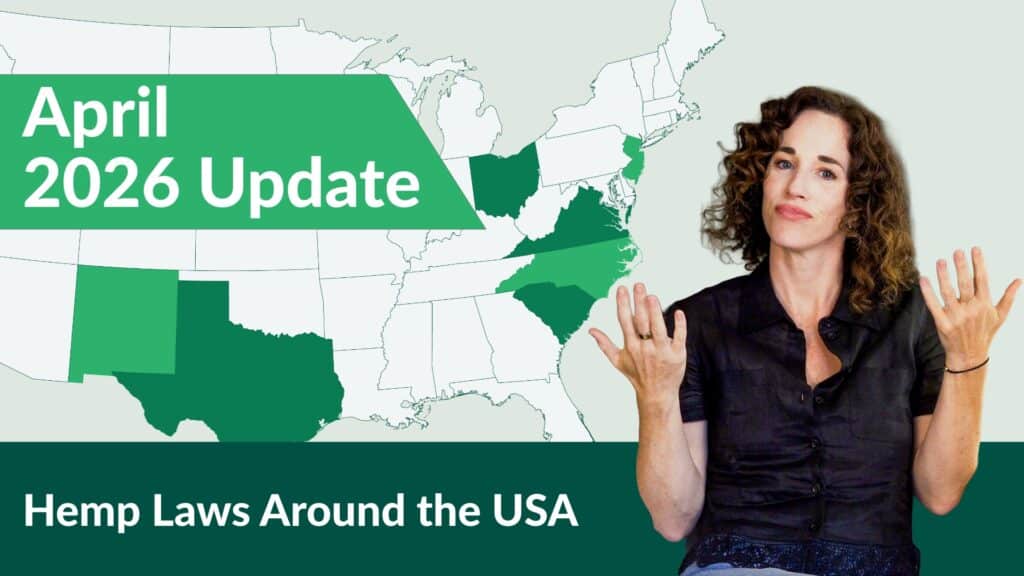
The countdown has officially begun. Hemp is set to face a massive federal regulatory shift in November 2026. While the details of this transition are still evolving, the potential for a federal shutdown means that “business as usual” is no longer an option.
As a health and wellness attorney, I advise clients daily on how to navigate this uncertainty. This isn’t about panicking—it’s about being prepared. You need to build a structure that is “built for impact” so you can outlast the next pivot.
Here is your “Doomsday” checklist to ensure your business remains protected and thriving.
1. Audit Your Contracts: Force Majeure & Liability
Most people skim the “miscellaneous” section of their contracts, but this is where your protection lives.
- Force Majeure Clauses: Standard boilerplate often covers “Acts of God” or war, but in this industry, you need it to address regulatory shutdowns. Ensure your clause allows you to suspend or terminate performance if it becomes legally impossible to operate as a hemp business.
- The Payment Trap: Watch out for clauses that suspend “all performance… except for payment.” You don’t want to be legally obligated to pay a vendor when your ability to sell product has been shut down overnight.
- Liability Allocation: Be clear on when liability shifts. Does the distributor take the hit the moment a shipment leaves your warehouse, or only upon receipt? Who is responsible if a product is seized at a state line?
2. Secure Business Interruption Insurance
If you don’t have a general liability policy, get one today. But for the 2026 pivot, you specifically need to look into Business Interruption Insurance. * This can provide coverage during gaps caused by massive regulatory shifts that force you to shut down, move to a different state, or completely overhaul your manufacturing line. It is an investment in your company’s survival.
3. Re-evaluate Your Workforce: Employees vs. Contractors
As you build your team this year, consider the flexibility of your workforce.
- While you cannot simply “switch” an employee to a contractor overnight due to strict legal classifications, you should think about your future needs.
- If you anticipate moving headquarters or switching to a smaller delivery model, a leaner W2 workforce may be easier to manage during a pivot.
4. Inventory Management: Small Batch Over MOQs
This is not the year to meet massive Minimum Order Quantities (MOQs) for packaging, devices, or raw materials unless you are certain you can move that inventory before November.
- Small Batch Manufacturing: Look for suppliers who allow smaller orders or work with a co-manufacturer that offers more flexibility.
- Depletion Timing: Track how quickly you are moving through materials. You do not want a massive shipment of raw materials arriving on November 10th if you have nowhere to sell them on November 13th.
5. Preparing for the “In-State” Game
There is a strong theory that after November 2026, hemp may mirror the current cannabis market: a patchwork of individual state markets with their own rules.
The MSO Model: If you are a multi-state operator, start formalizing your Standard Operating Procedures (SOPs) now. If you have a dialed-in, replicable formula for entering a state, you can move much faster when the “starting gun” goes off.
Choose Your State Wisely: The safest bet is often to operate within a state that has an established, robust regulatory framework.