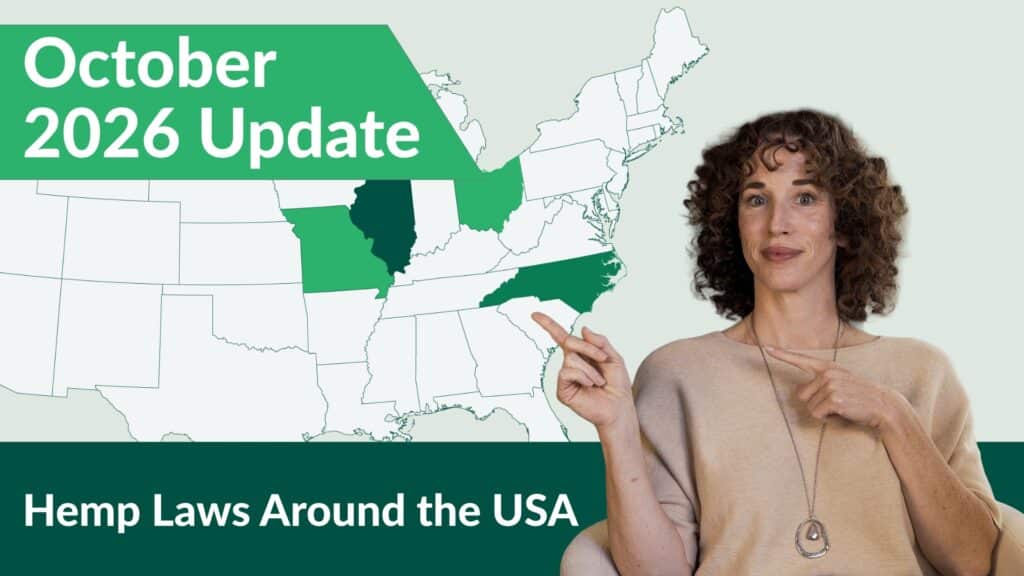
North Carolina’s hemp industry survived another serious legislative threat, but the fight over HB 328 came closer to shutting down the market than many stakeholders may realize. The immediate ban failed, yet the episode shows why hemp businesses, consumers, and service providers should prepare for the issue to return in 2027.
North Carolina Has Built a Major Hemp Market
North Carolina has become one of the country’s most active hemp markets. Manufacturers, distributors, retailers, and investors have moved into the state as other jurisdictions adopted more restrictive policies.
The state’s legal definition currently mirrors the 2018 federal framework: cannabis is hemp when it contains no more than 0.3 percent delta-9 THC by dry weight. Products made from qualifying hemp are therefore legal under the existing state definition.
The State Still Lacks a Comprehensive Hemp Program
North Carolina ended its state hemp program in 2023. The USDA now handles cultivation licenses, while the state has no comprehensive agency framework governing finished hemp products. There is no statewide age gate, product-testing system, labeling standard, or dedicated licensing program comparable to those adopted elsewhere.
That regulatory gap initially allowed the market to grow, but it has also created enforcement risk. Since 2024, law-enforcement agencies have used differing interpretations of hemp law to seize property, disrupt businesses, and claim that lawful hemp products are illegal. Much of that conflict turns on the distinction between delta-9 THC and total THC, including THCA.
The Industry Has Asked for Regulation, Not a Ban
Contrary to claims that the hemp industry opposes oversight, North Carolina stakeholders have repeatedly supported common-sense regulation. Proposed frameworks have included a 21-and-older sales requirement, business licensing, agency oversight, taxes, and meaningful penalties for noncompliance.
Those proposals have repeatedly stalled because hemp legislation has become entangled with a separate medical cannabis proposal and the political interests surrounding it.
How HB 328 Became a Hemp Ban
After a regulatory bill failed, a small group of lawmakers took an older hemp bill that had previously passed the Senate, removed its prior substance, and replaced it with language that would have immediately adopted the restrictive federal definitions proposed in the 2026 appropriations package.
That change would have eliminated most of North Carolina’s existing hemp market without waiting for the federal moratorium to expire. The revised bill moved through the Senate and came close to passing the House.
Why the North Carolina Hemp Ban Failed
The ban was stopped by coordinated advocacy from the Carolina Hemp Business Coalition, other industry groups, stakeholders, and elected officials. Governor Josh Stein also publicly argued that the General Assembly should focus on sensible regulation rather than prohibition.
Because of those efforts, the existing North Carolina hemp market remains intact for now. The General Assembly has not formally ended the year, but it is operating on a limited calendar and is unlikely to return to the issue unless federal developments force a change.
The Hemp Fight Is Likely to Return in 2027
Stakeholders should not mistake this outcome for a permanent resolution. When lawmakers return in early 2027, another attempt to restrict or ban hemp is likely, whether or not Congress extends the federal moratorium.
North Carolina hemp manufacturers, retailers, distributors, ancillary service providers, and consumers should learn where their legislators stand. They should ask lawmakers to reject prohibition and support a workable regulatory system that protects adults, businesses, and the state’s economy.
What North Carolina Hemp Stakeholders Can Do
The immediate priorities are staying informed, communicating with elected representatives, supporting common-sense regulation, and understanding candidates’ positions before the November midterm election. The close call over HB 328 showed that organized participation can change the result, but it also showed how quickly the market can be threatened.
This article is general educational information and not legal advice. Businesses facing enforcement, product, or distribution questions should consult counsel about their specific circumstances.