Should you restructure your hemp business before the expected federal restrictions take effect? There is no universal answer. The right decision depends on your products, sales channels, states, employees, contracts, personal goals, and willingness to remain in a changing market.
What every hemp business can do now is prepare. A structured review of inventory, contracts, legal assumptions, and compliance records can reveal which parts of the business may continue and which require a different plan.
Start With the Federal and State Landscape
The Senate passed a continuing resolution that could extend the federal moratorium tied to the 2026 appropriations language from November to December 11. If the underlying language takes effect, it will redefine hemp and consumable hemp products and remove much of the current market from federal protection.
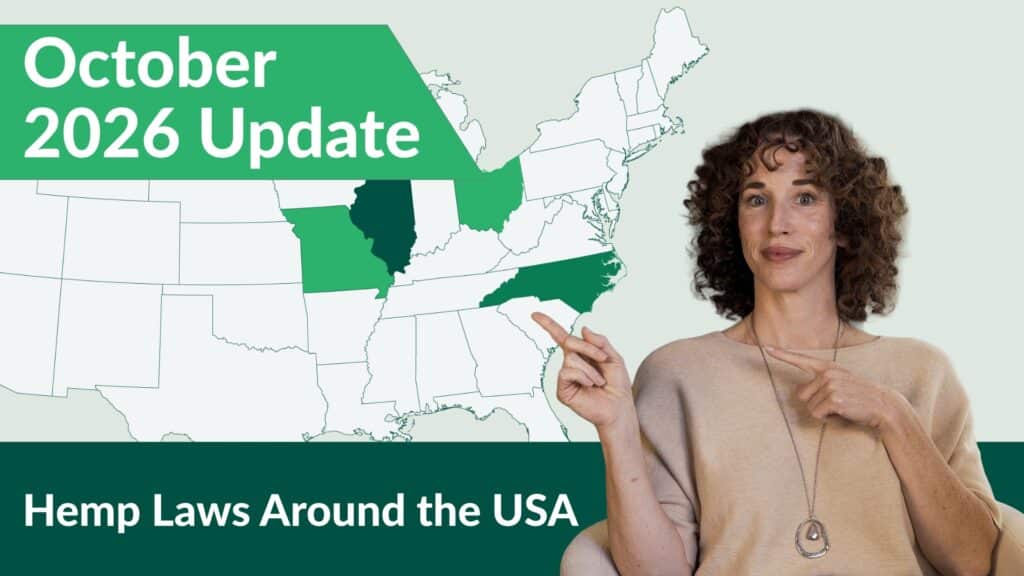
The impact will vary by state. Jurisdictions with established hemp frameworks, including Tennessee, Minnesota, Florida, and Texas, may continue to permit products that fit their state programs. The major federal problem will be interstate shipment of products that no longer comply with federal law. States that have already restricted hemp may offer little viable market, while states without a robust program may face uncertainty about enforcement.
Decide Whether You Are Exiting, Pivoting, or Continuing
Some owners will decide they are done with the hemp industry. Others will pivot into a different category. Still others will continue operating their existing hemp business as long as the law allows. Each can be a rational choice, but continuing without a deliberate plan is not.
Divide Your Hemp Inventory Into Three Buckets
The first bucket is products containing cannabinoids treated as synthetic under the proposed federal definition. Those products are the least likely to have a viable pathway if the new language takes effect.
The second bucket is naturally derived products containing more than 0.4 milligrams of total THC per container. Many current hemp products will fall here. They may remain viable within certain states, but interstate shipment may no longer be lawful.
The third bucket is naturally derived products already below the threshold. Few existing products may qualify, which creates a potential development opportunity. Manufacturers may consider compliant microdose or CBD-only products. Distributors should identify suppliers, and retailers should ask vendors which compliant products can replace inventory that may disappear.
Review Supplier and Vendor Contracts Now
Manufacturers and distributors should examine every written and oral arrangement with raw-material suppliers, packaging vendors, logistics providers, and other partners. Three contract issues deserve immediate attention.
First, locate force majeure provisions and determine whether a legal shutdown would excuse performance. Second, identify who bears the risk when a product becomes noncompliant, is seized in transit, or must be recalled. Third, review minimum orders, purchase cadence, termination clauses, liquidated damages, and other obligations extending beyond November or December.
If a contract creates obligations the business may no longer be able to satisfy, the time to renegotiate is before the deadline—not after a breach or enforcement event.
Do Not Assume Another Company’s Court Win Protects You
A temporary restraining order or injunction may protect only the named plaintiffs. Ohio is a clear example: when certain companies obtained emergency relief, many people incorrectly concluded that the entire market had reopened. It had not.
A ruling in one state may also rest on language or constitutional issues that do not apply elsewhere. Businesses need to understand the actual scope of a decision before relying on it for their products, locations, or distribution channels.
Strengthen Your Compliance Documentation
Certificates of analysis, labels, packaging, shipping manifests, bills of lading, invoices, accounting records, and seed-to-sale documentation can become critical during enforcement. Businesses should use reputable laboratories and keep records matched to the products and jurisdictions involved.
Documentation does not guarantee a favorable result, but it helps show that the company operates as a legitimate business attempting to comply in a moving regulatory environment. If intent becomes an issue, that evidence matters.
There Is No One-Size-Fits-All Hemp Restructuring Plan
A company selling directly to consumers in many states faces different risks from a single-location retailer or a wholesale-only manufacturer. The owner’s family needs, employees, capital, contracts, and long-term goals also matter. The honest answer is not that every hemp business should restructure in the same way; it is that every hemp business should begin the analysis now.
This article provides general educational information and is not legal advice for any specific company. A tailored restructuring decision requires a review of the business, products, markets, obligations, and goals.